A modular, renewable-powered logistics and trade ecosystem for sea-based societies.

Team Role: Leader of a Design Team
Tools: Miro, Illustrator, Sketching, Fusion 360, TwinMotion, Adobe Premiere, Canva
Focus: Systems Design, Product Design, Adaptive Design, Speculative Design
Timeline: 12 Weeks
Overview
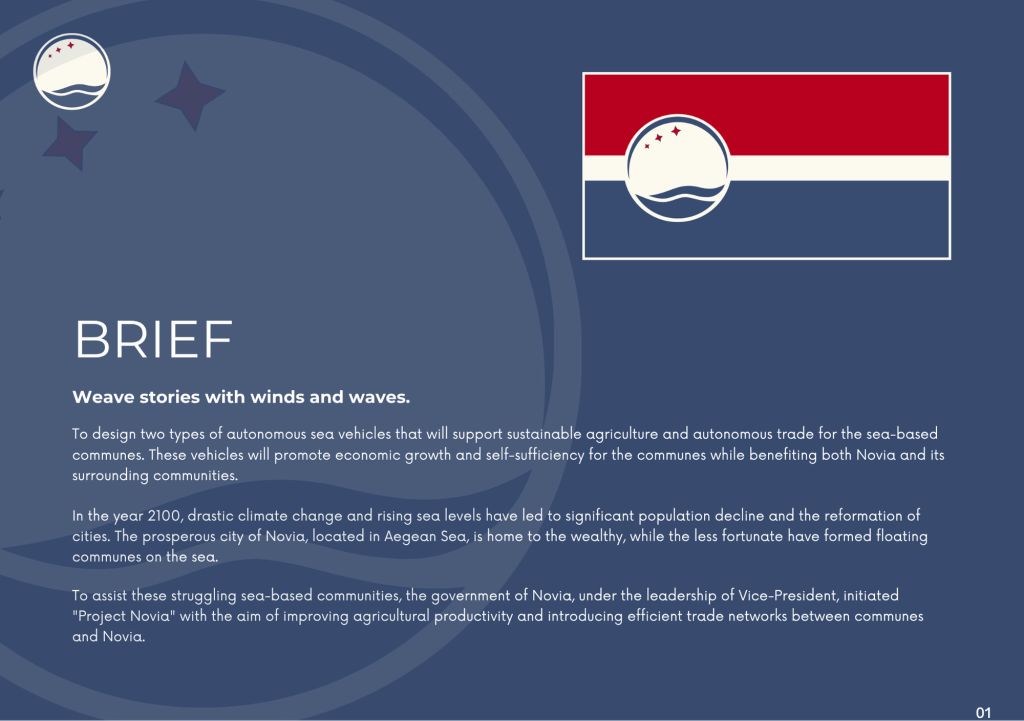
In the year 2100, sea level rise has redrawn coastlines and displaced much of humanity. The wealthy inhabit Novia, an island metropolis in the Aegean Sea. The poor, displaced by climate change, form self-sufficient floating communes scattered across open water.
To ensure food security, economic survival, and sustainable development, a government-led initiative launches Project Novia, a circular system of autonomous marine logistics, powered by renewable energy and designed for modular expansion.
System Architecture
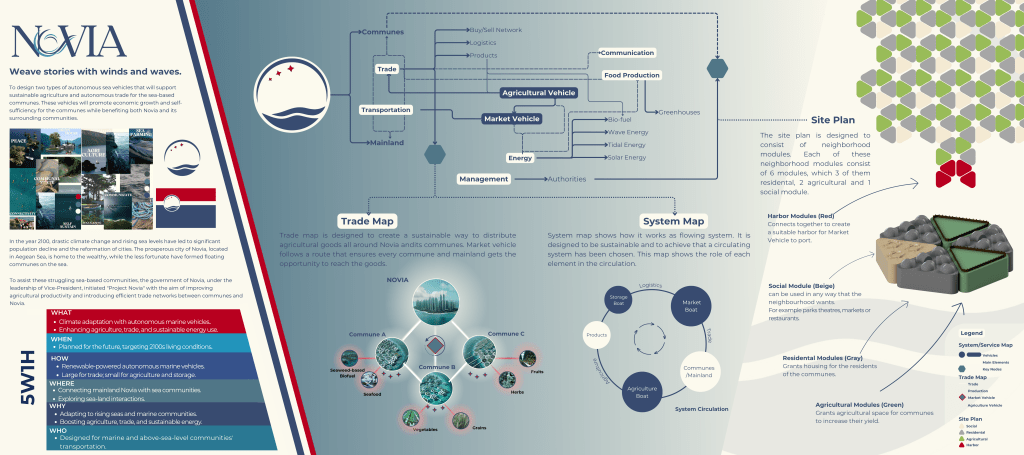
The Novia system consists of interdependent modules, vessels, and floating settlements arranged in a circular trade and production loop:
Closed-Loop Trade & Agriculture Flow
- Commune Modules (Residential, Agricultural, Social)
- Floatable hex-based units configured into neighborhoods
- Agricultural modules support aeroponic and aquaponic farming
- Social modules for flexible community use (markets, events, theaters)
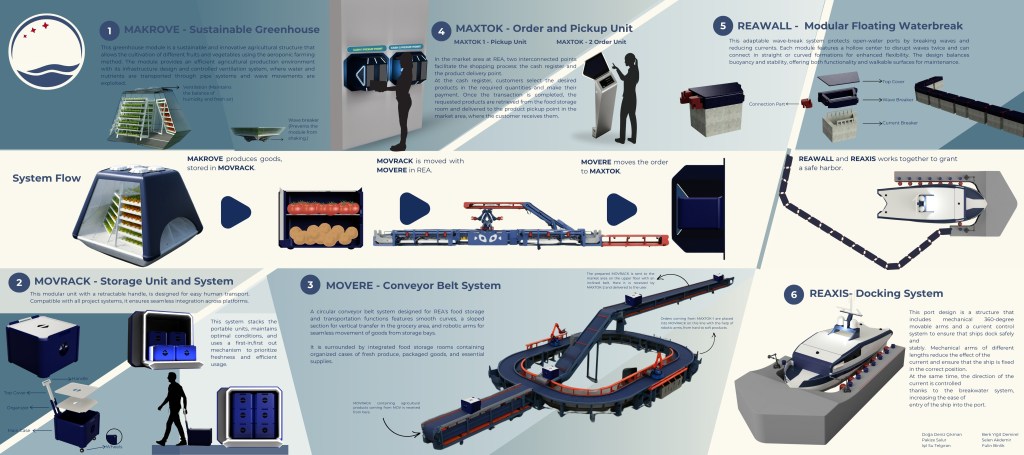
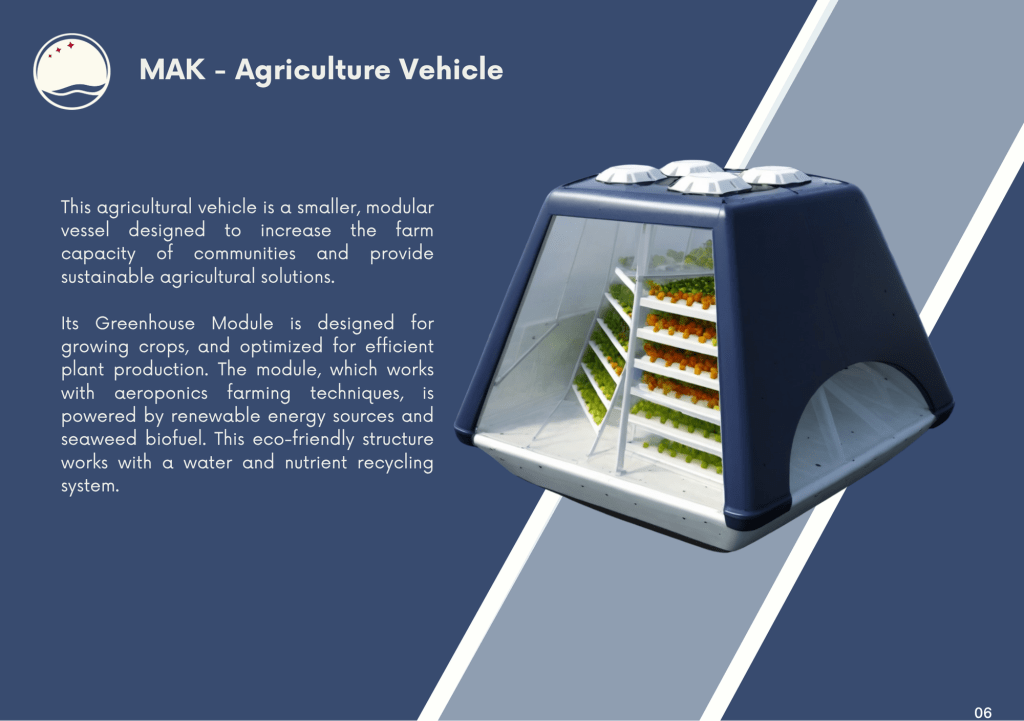
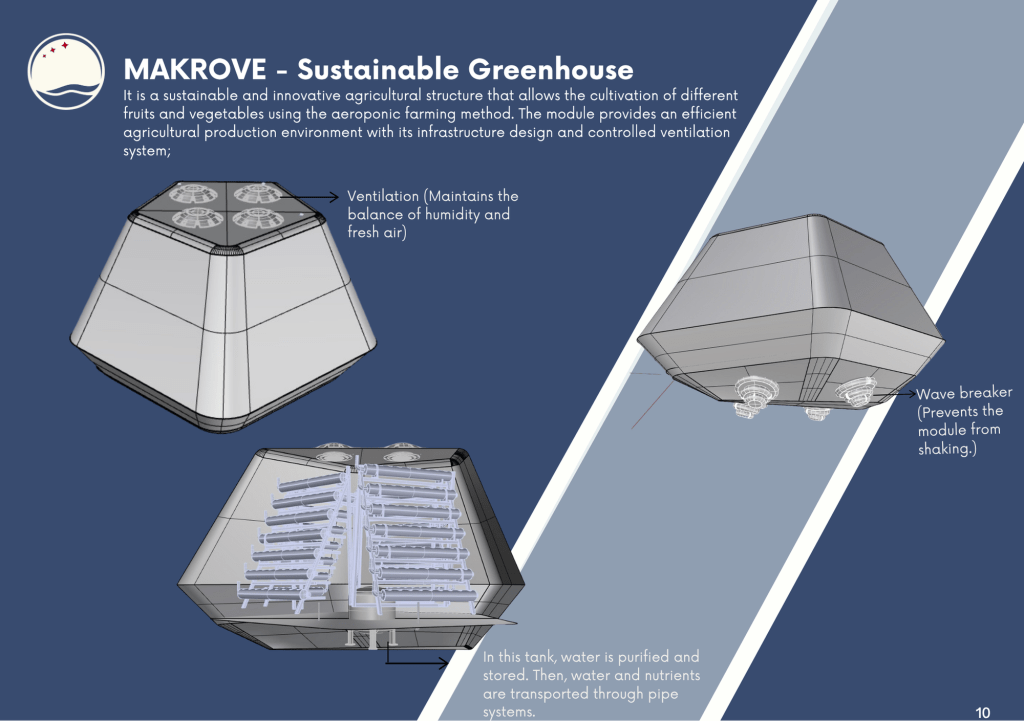
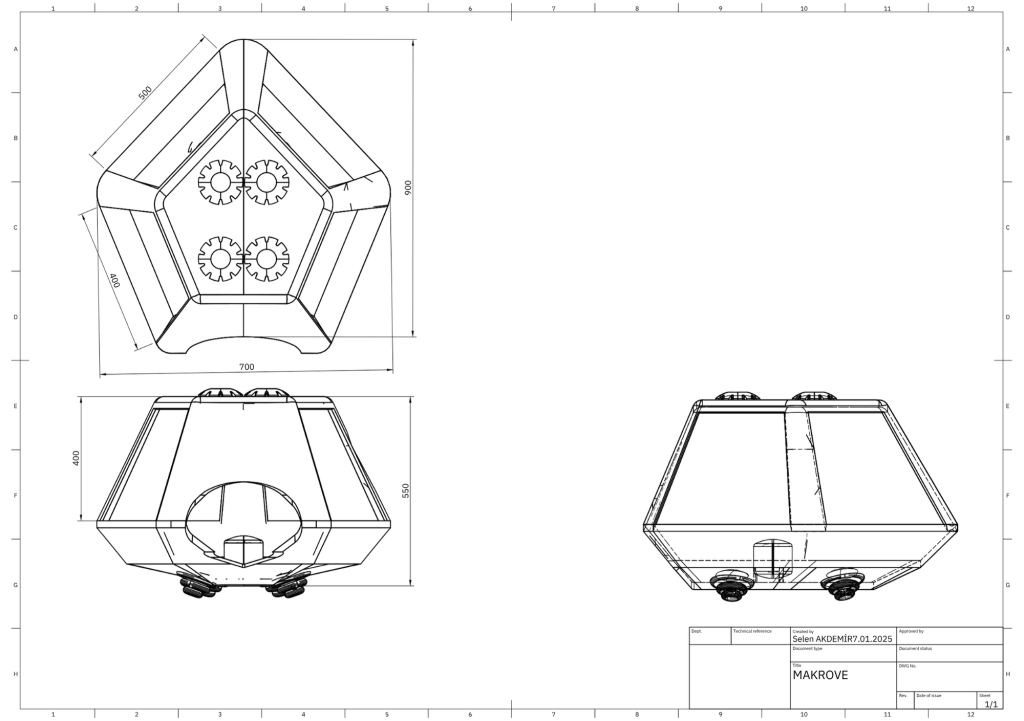
- Agricultural Vehicles (MAK)
- Mobile greenhouses powered by seaweed biofuel
- Serve as mobile food producers, scalable by commune size
- Can dock with both market vessels and floating ports
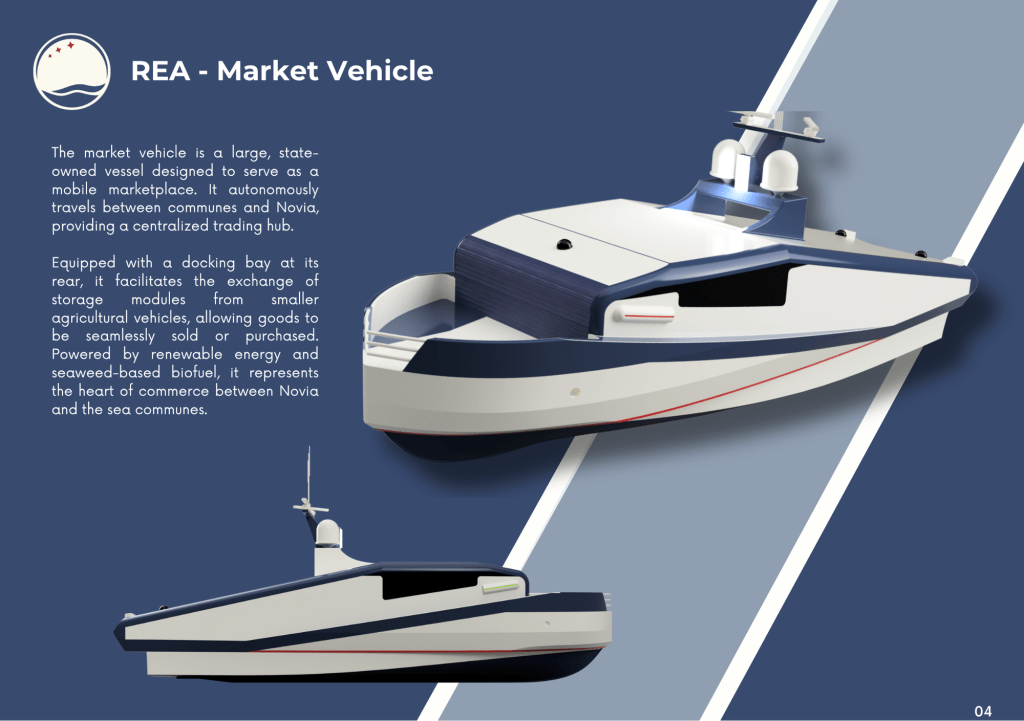
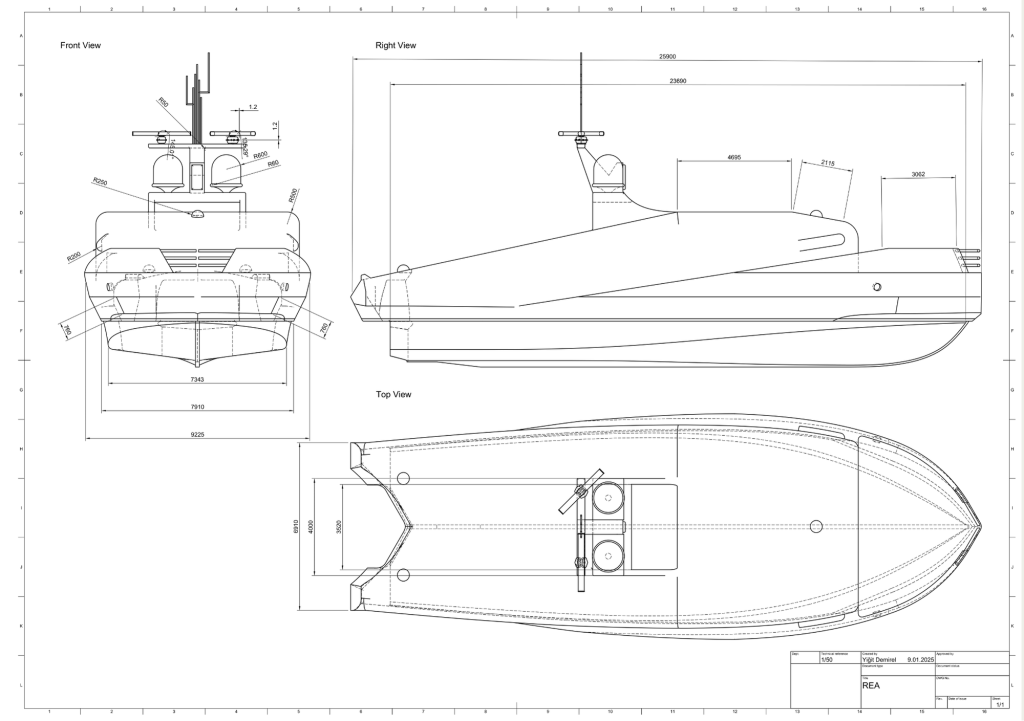
- Market Vehicles (REA)
- Large autonomous trade boats
- Travel between Novia and sea communes, collecting harvests and distributing goods
- Act as mobile economic hubs with integrated inventory & order systems
- Storage & Logistics Infrastructure
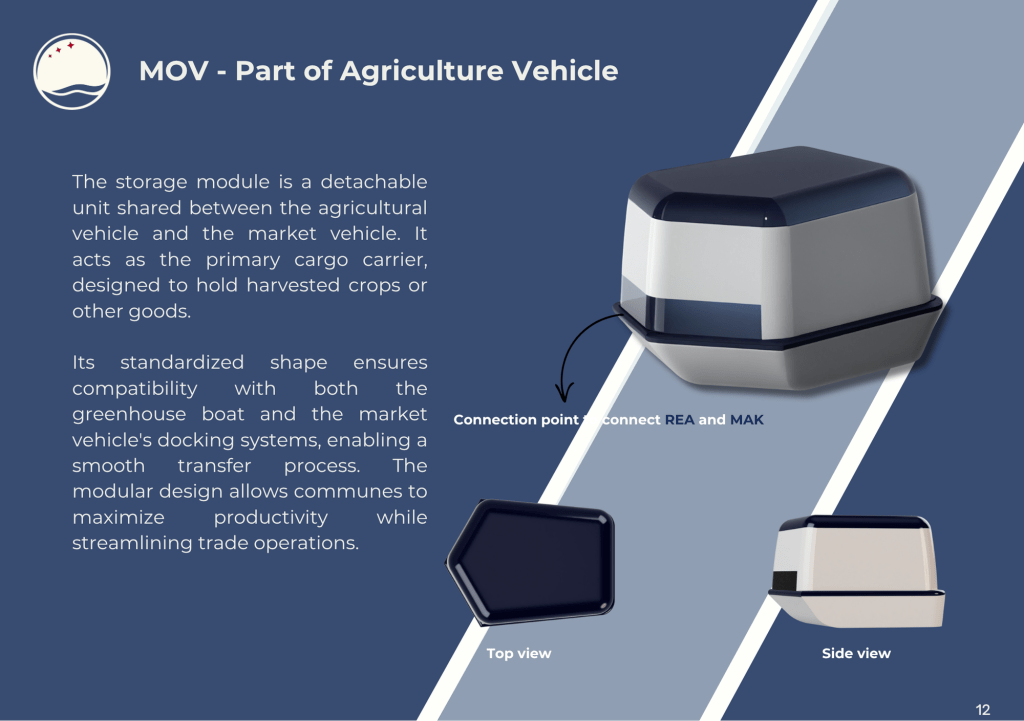
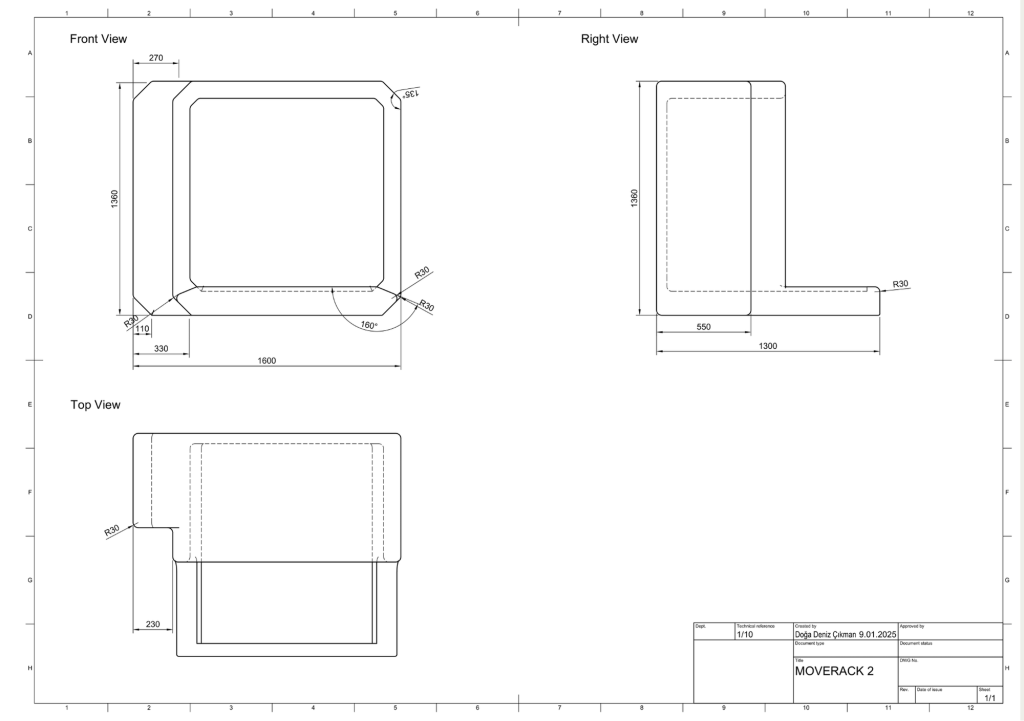
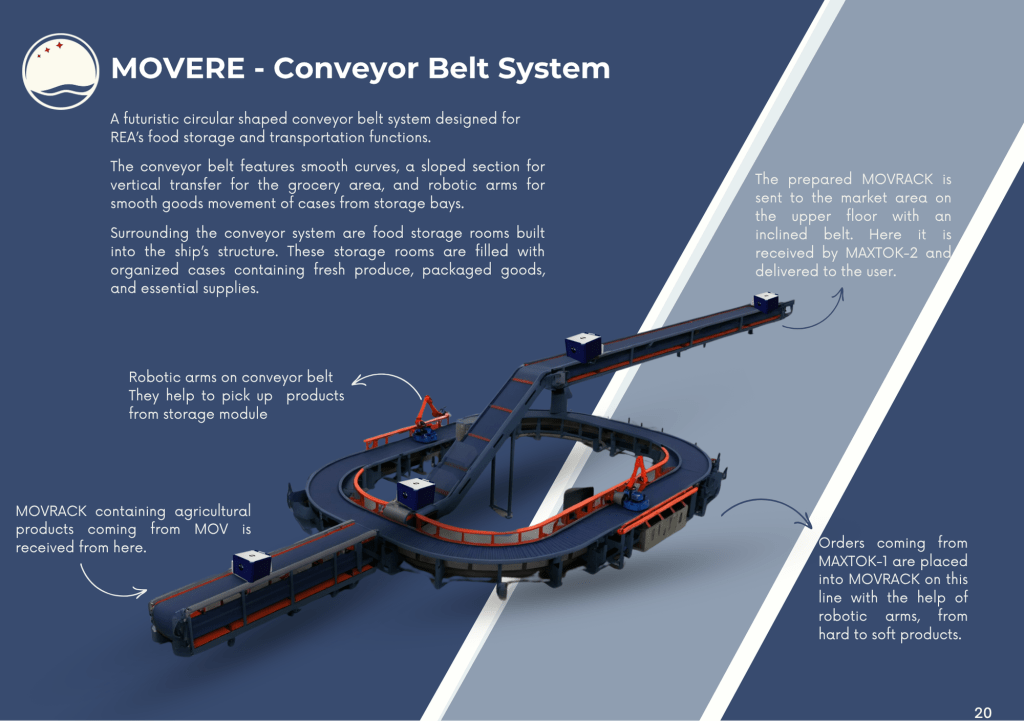
- Shared modular containers (MOVRACK) transfer seamlessly between MAK and REA
- Robotic conveyor systems (MOVERE) automate food sorting, loading, and delivery
- MAXTOK units handle order placement and retrieval for customers
- Energy Layer
- Entire system powered by tidal, solar, and wave energy, with backup from seaweed-based biofuel
- REA and MAK vessels store excess energy to support communal microgrids

Strategic Features
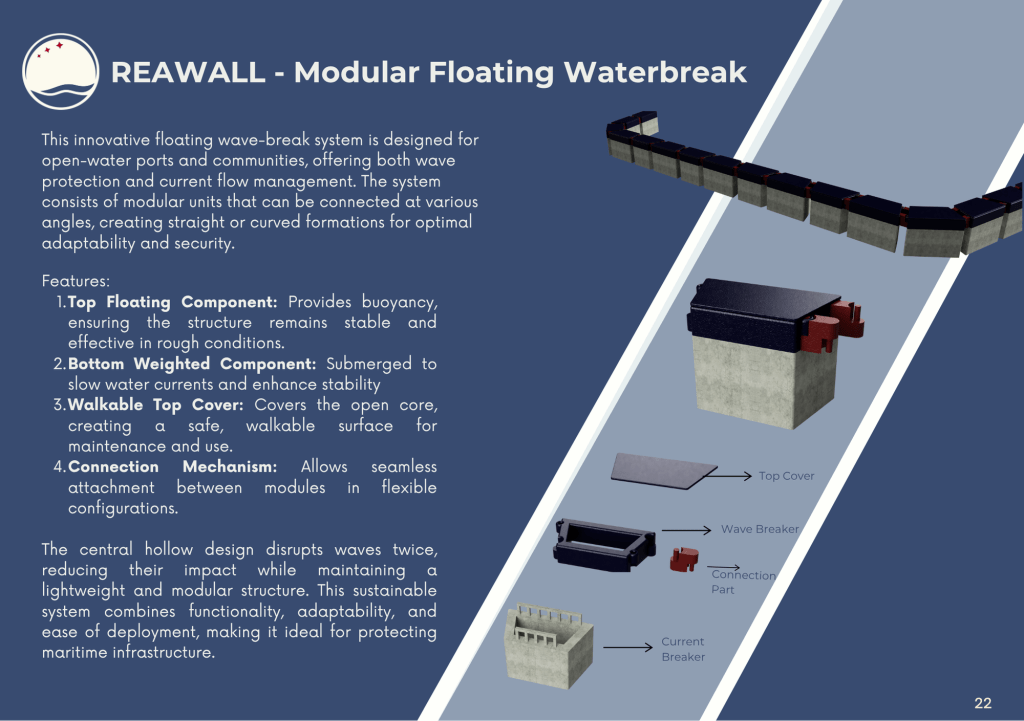
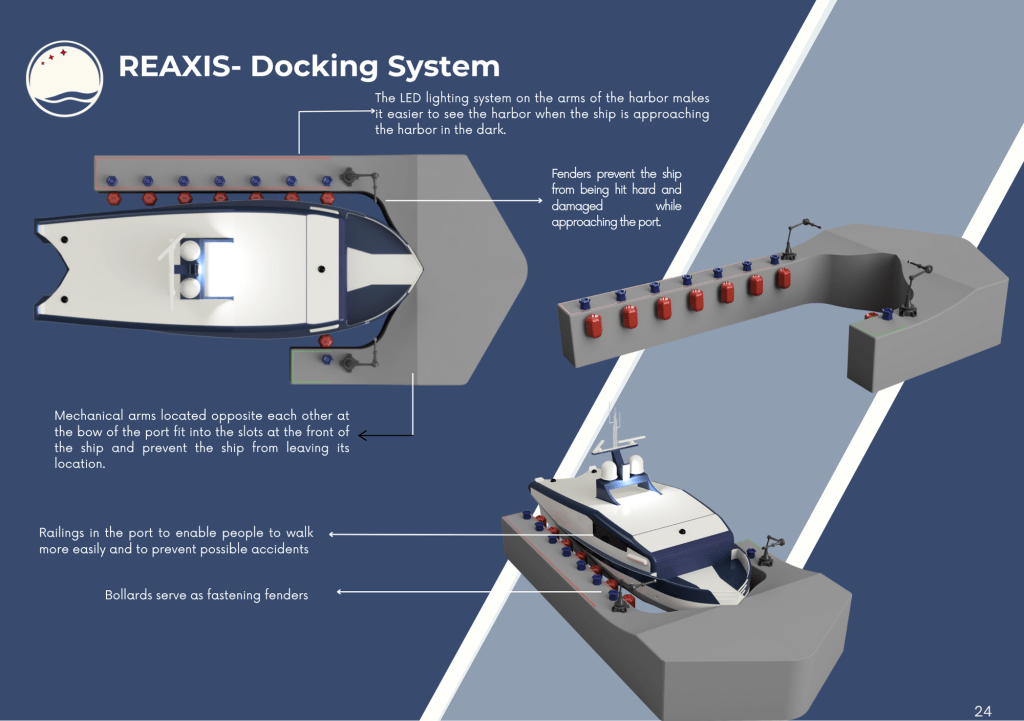
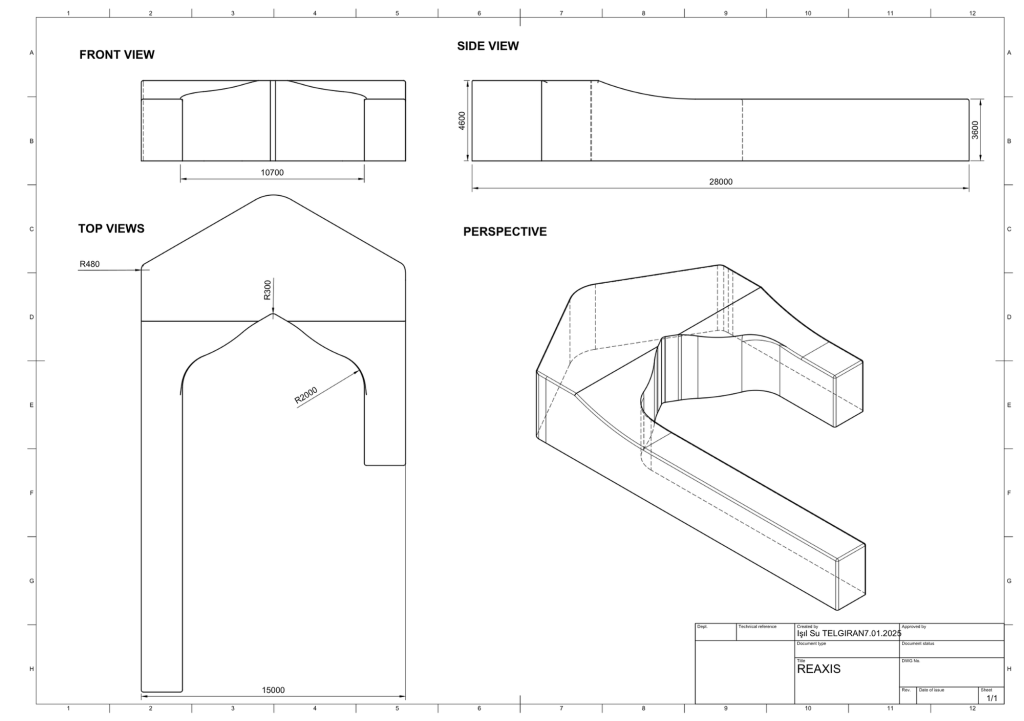
- Floating Wave Break Harbors (REAWALL + REAXIS) for modular safe docking
- Standardized interfaces between all floating units for scalability
- Circular economic model: goods flow outward, data + revenue flow inward
- Community-first philosophy: designed for resilience, not extraction
Social & Political Implications
- Distributed autonomy: each commune self-governs but connects via trade
- Dual economies: Novia benefits from food production, communes gain access to tools and support
- Conflict/hope duality: the system reflects an unequal world, but one still held together by exchange and ingenuity
Reflection
Novia was an exercise in designing not just objects, but whole civilizations. By focusing on circulation, redundancy, and adaptive architecture, we created a system that mirrors both the precarity and potential of a post-climate world.









 Berk Yiğit Demirel